

A guardianship record names an adult beside a child.
That name can look like an answer: the person who raised the child, the relative who took the child in, perhaps even an adoptive parent.
But guardianship records were created within particular legal systems for particular purposes. A guardian might manage inherited property, represent a minor before a court, approve a marriage or apprenticeship, submit annual accounts, or supervise part of an estate. The child might continue living with a surviving parent throughout the entire guardianship.
The record may preserve a valuable family relationship. It may also preserve an office, an administrative duty or a temporary appointment. Before adding the guardian to your family tree, establish exactly what the document says—and what it does not say.
Begin with the authority, not the name
First identify the body that created or supervised the record. Depending on the place and period, that might have been:
- An orphan chamber
- A probate, civil or family court
- A municipal authority
- A notary
- A church or religious court
- A colonial administration
- A charitable institution
- An estate executor acting under a will
The authority determines the record’s purpose, vocabulary and legal effect.
Dutch weeskamers, or orphan chambers, commonly protected the property interests of minors after a parent died. A child could therefore appear in orphan-chamber records while still living with the surviving parent. The historical use of words translated as “orphan” does not always mean that both parents were dead.
Read the archive’s collection guide and series description before interpreting an individual entry. Establish the jurisdiction, dates, surviving volumes, indexing method and responsibilities of the institution.
Transcribe the legal role exactly
Do not immediately translate every unfamiliar role as “guardian.” Transcribe the original term first, including abbreviations and spelling.
Terms such as voogd, toeziend voogd, curator, tutor, administrator, executor, trustee or surety can refer to different responsibilities. Their meaning can also change across legal systems and centuries.
For each person, record:
- The original term
- Your provisional translation
- The authority that assigned the role
- The child or estate concerned
- The date of appointment
- Any stated relationship
- The duties described
- The date and reason the role ended
A careful note might read:
The entry calls Jan de Boer toeziend voogd. “Supervising guardian” is used here as a working translation pending examination of the applicable Dutch law and the complete file.
Legal guardianship is not the same as daily care
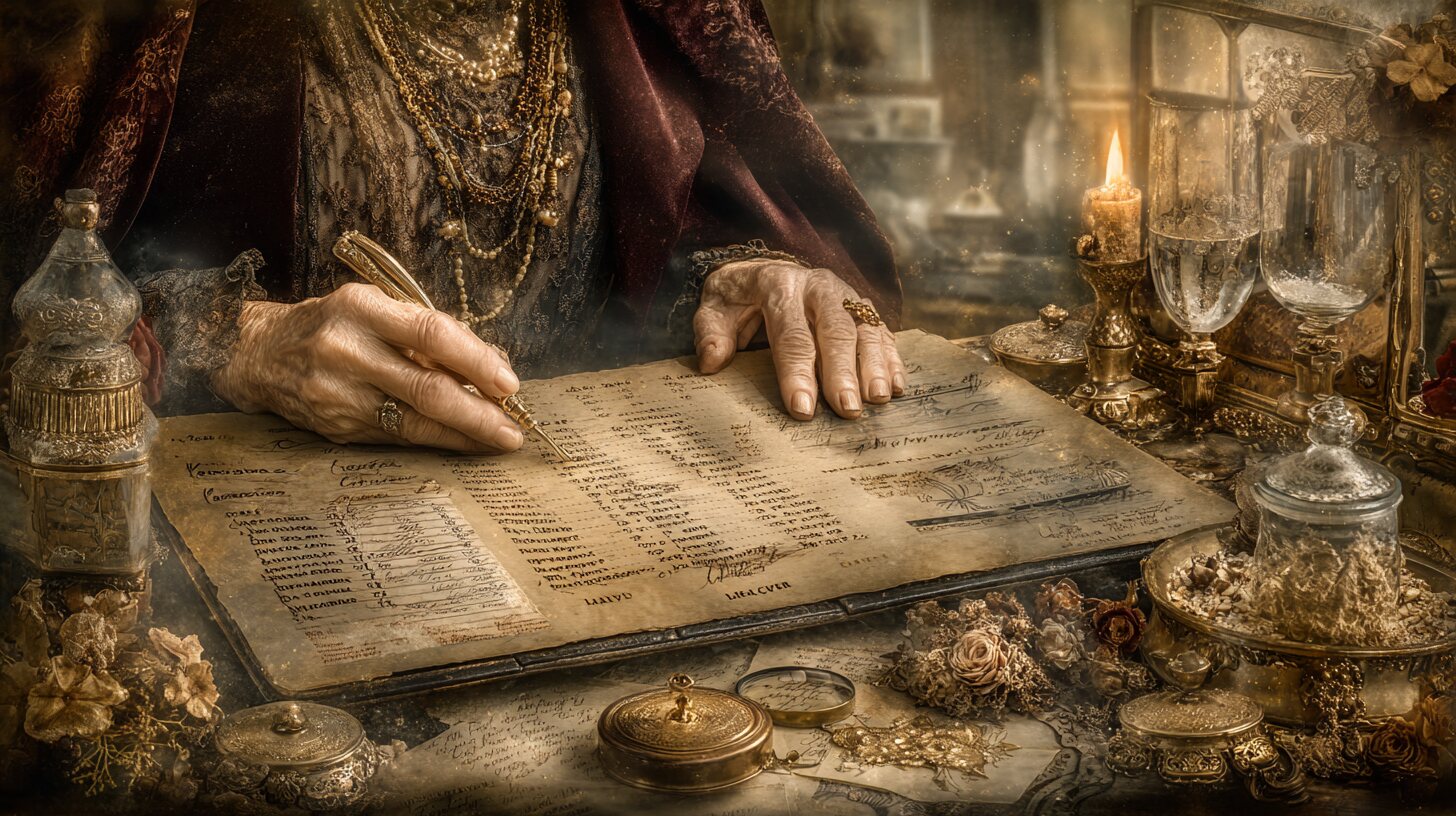
A guardian did not necessarily share a household with the child.
Separate these questions:
- Who held legal authority?
- Who managed property?
- Who provided the child’s everyday home?
- Who paid for food, clothing, schooling or training?
- Who was described as a relative?
- Who acted only as a professional or public official?
Use population registers, censuses, address records, school files, institutional admissions, correspondence and guardian accounts to investigate residence and care. The guardian’s appointment alone usually cannot answer those questions.
Compare the child’s address with the guardian’s household. If they differ, do not treat that as a contradiction automatically. It may show that the appointment concerned legal representation or inherited property rather than daily custody.
A stated relationship still needs verification
A guardianship order may call someone an uncle, aunt, cousin or brother-in-law. Record the description, but also ask who supplied it and whether the clerk had independent knowledge.
Then verify the relationship with independently created evidence:
- Birth or baptism records
- Parents’ marriage records
- Death or burial records
- Population registers or censuses
- Notarial deeds and wills
- The proposed guardian’s own family records
- Property, tax or probate records
“Uncle” might mean a biological uncle, an uncle by marriage, a step-relative, an older family associate or an informal term of respect. The legal appointment proves the role. It does not automatically prove the exact biological relationship.
Guardianship does not prove adoption
Guardianship, custody, residence, foster care and adoption are different relationships.
A guardian could administer money without providing a home. A child could live with grandparents without those grandparents holding the formal guardianship. A step-parent might support the household but lack the legal role. An institution might house and educate a child while a court-appointed guardian handled property.
Use the word adoption only when supported by an adoption record or a legally equivalent process in that jurisdiction and period.
If no adoption record has been found, write precisely:
Pieter Jansen was appointed guardian of Maria de Vries in 1874. The available evidence does not establish that he adopted her.
Determine whether property triggered the appointment
Many guardianship systems were especially concerned with protecting property inherited by minors.
Look for:
- An estate inventory
- A guardian’s bond or financial guarantee
- A valuation of land, tools, livestock or household goods
- Shares assigned to each child
- Annual accounts
- Permission to sell or mortgage property
- Receipts for maintenance, schooling or apprenticeship
- A final account and discharge
The presence of detailed financial administration strongly suggests that the guardian’s documented responsibility concerned the child’s assets. It may also reveal aspects of care, but those should be demonstrated from the entries rather than assumed.
Reconstruct the complete document chain
A single index entry may lead to a much larger file:
- A parent’s death or burial record
- A petition for guardianship
- A guardian’s appointment
- A bond or guarantee
- An estate inventory
- Annual financial accounts
- Permission for a sale or property transaction
- A remarriage-related declaration
- An apprenticeship arrangement
- An institutional admission
- A final financial account
Transcribe every date, file number and named authority.
Then reconstruct the chain:
Parent’s death → estate inventory → guardian’s appointment → annual accounts → property transaction → final discharge
Each document was created for a different purpose and may contain different informants. Do not cite the entire chain as though it were one record.
Guardians could change
A child might have several guardians before reaching adulthood.
A guardian could die, become ill, move away, resign, be removed, be replaced after remarriage, become unable to provide a financial guarantee, complete only a temporary assignment, manage property jointly with another person, or serve for one child but not the child’s siblings.
Record every appointment and termination separately.
An unfamiliar surname in a later account does not automatically indicate a new family relationship. It may identify a replacement official, professional administrator or husband of a female relative whose connection must be established independently.
Build a guardianship timeline rather than storing only the final name.
Construct a guardianship-evidence table

Keep the changing roles visible. The following example is fictional.
| Date | Record | Child or ward | Person and role | What the record states | Present assessment |
|---|---|---|---|---|---|
| 14 March 1874 | Death certificate | Maria de Vries, daughter | Father Willem de Vries died | Declarant was Willem’s neighbour | Establishes death; child not discussed |
| 2 May 1874 | Guardianship order | Maria, aged 12 | Pieter Jansen appointed guardian | Pieter described as maternal uncle | Legal role and stated kinship |
| 18 June 1874 | Estate inventory | Maria and two siblings | Mother present; guardian accountable | Children inherited workshop tools and cash | Guardianship appears property-related |
| 1 January 1875 | Population register | Maria | Lives with mother and stepfather | Guardian lives at another address | Daily household differs from legal guardian |
| 8 September 1880 | Final account | Maria | Guardian discharged after her marriage | Remaining funds transferred | Ends documented administration |
The table prevents a guardian’s appointment from becoming an unsupported adoption claim. It also reveals the next question: does an independent record confirm that Pieter Jansen was Maria’s maternal uncle?
A fictional case: the “adoptive uncle”
Maria de Vries was twelve when her father, Willem, died in 1874. A guardianship register names Pieter Jansen as her guardian. A family tree identifies Pieter as Willem’s brother and says he adopted Maria.
Observation: Willem’s death certificate identifies Maria’s mother as Anna Jansen.
Observation: The guardianship order calls Pieter Jansen Maria’s maternal uncle.
Observation: An estate inventory shows that Maria and her two siblings inherited shares of their father’s property.
Observation: The population register places Maria with her mother, Anna, both before and after Anna’s remarriage.
Observation: Pieter lived at a different address and submitted accounts concerning the children’s inheritance.
Interpretation: Pieter’s documented role concerned legal representation and property administration. The stated relationship is compatible with his being Anna’s brother.
Uncertainty: Pieter’s birth or baptism record and the parents of Anna Jansen have not yet been examined. No adoption record has been located.
Present conclusion: The evidence supports identifying Pieter as Maria’s guardian and probable maternal uncle. It does not establish that he adopted her or provided her everyday home.
Next research action: Locate the birth or baptism records of Anna and Pieter Jansen and examine the complete guardianship file for the appointment’s precise terms.
Remarriage can trigger new records
The remarriage of a surviving parent may produce important guardianship or property documentation. Its purpose was not necessarily to remove the children from that parent.
Authorities might require an inventory of the deceased parent’s estate, a statement of each child’s share, appointment of a supervising guardian, security for inherited property, settlement of claims before the new marriage, a promise by the new spouse or evidence that an orphan chamber had been satisfied.
Amsterdam’s contribution registers were used when widows or widowers with minor children wished to remarry and needed to declare what those children would inherit from the deceased parent.
Therefore, an entry close to a second marriage may concern protection of inheritance rather than a change of residence. Compare it with the remarriage certificate, marriage supplements, population registers, the deceased parent’s estate, a marriage contract and later guardian accounts.
An orphanage admission needs its own analysis
Do not use orphan chamber and orphanage interchangeably.
An orphanage, children’s home or charitable institution might admit a child because of the death of one or both parents, poverty, illness, hospitalisation, imprisonment, military service, migration, family breakdown, temporary inability to provide care, or a work or training arrangement.
Identify the institution, admission policy, sponsoring body, entry date, person requesting admission, parents’ status, financial arrangements, religious or residency requirements, discharge date and later placement.
A child called an orphan in an institutional register may still have had a living parent. Search for admission files, board minutes, correspondence, payment accounts and population records before concluding that the entire family had died.
Look for siblings who were treated differently
Guardianship records can restore children who disappeared from a household after a parent’s death. But siblings were not always kept together.
They could be divided because of age, sex, available relatives, apprenticeship, employment, illness, inherited property, half-sibling relationships, institutional eligibility, religion or guardians appointed under different wills.
Create a list of every child named in the estate, guardianship and household records. Ask whether all known children appear, whether deceased children are included, whether one child had a separate inheritance, whether older children acted for younger siblings, whether children from an earlier marriage were treated separately, and whether some children were already legally independent.
Compare independent evidence
A guardianship order, estate inventory and final account may be several documents but still belong to one administrative file. A later account might simply repeat the relationship stated in the original appointment.
Seek independently created evidence: vital and church records, population registers, wills created before the death, notarial deeds, property records, school or apprenticeship files, institutional admissions, the children’s marriage records, newspapers and correspondence with established provenance.
The Board for Certification of Genealogists describes sound conclusions as requiring thorough research, reliable documentation, analysis, correlation and resolution of conflicting evidence. Three statements copied from one petition do not become three independent proofs.
Use indexes as guides, not substitutes
Guardianship indexes may omit children’s full names, ages, surviving parents, relationships, property, replacement guardians, account dates, wills, objections and reasons for termination.
Search every relevant surname and spelling variant, including the child, both parents and suspected guardians. Once an index points to an entry, inspect the complete register page, surrounding entries, cross-references, account books, loose estate papers and the archive inventory.
The index helps you locate the case. The file explains it.
When no guardianship record is found
Failure to find a record does not prove that no guardian existed. The jurisdiction may be wrong, the records may not survive, the file may be catalogued under a parent or guardian, a will may have nominated guardians privately, or the material may be unindexed, restricted or filed with court or notarial records.
Record the search itself:
No guardianship entry was found in the surviving indexed series for Delft, 1872–1878, under the child, either parent or the suspected guardian. Unindexed court and notarial series have not yet been examined.
That is more accurate than saying the child had no guardian. Negative evidence becomes meaningful only after you understand which records should exist and how thoroughly they have been searched.
Record uncertainty and sensitive information
Guardianship files can document abandonment, debt, disability, institutionalisation, disputed parentage or family conflict. Avoid turning administrative language into a judgment about the people involved.
Observation: The institution recorded that the mother could not provide maintenance.
Interpretation: Financial hardship may have contributed to the placement.
Uncertainty: The mother’s circumstances and her own account have not been found.
For recent records, consider privacy restrictions and the interests of living people. Do not infer the contents of a closed file from its catalogue title.
Write an evidence-based conclusion
A useful conclusion states which record was examined, who created it, what role was assigned, which relationships were explicitly stated, what independent evidence supports them, what the record does not establish and which source should be sought next.
The Rotterdam guardianship order appointed Cornelis Smit to administer the inheritance of minor siblings Anna and Willem Vos after their father’s death. The order describes Cornelis as their maternal uncle, a relationship supported by his baptism record and their mother’s marriage certificate. Population records show that the children remained with their widowed mother. The evidence therefore supports Cornelis’s legal and financial role but does not show that he became their caregiver or adoptive parent. The next research action is to examine the annual accounts for payments relating to the children’s residence, schooling and maintenance.
The limits of the conclusion are part of its strength.
A practical Research Desk exercise
Choose one child whose parent died before the child reached adulthood.
- Locate the parent’s original death or burial record.
- Identify the declarant or informant.
- List every surviving minor child.
- Establish the legal jurisdiction at the time.
- Search for an orphan chamber, probate court, notarial or guardianship archive.
- Search under the child, both parents and suspected guardians.
- Transcribe every role exactly.
- Translate legal terminology separately.
- Determine whether the authority supervised the child, property or both.
- Record every guardian and the dates of service.
- Locate inventories, bonds and financial accounts.
- Follow references to wills, court orders and notarial deeds.
- Compare the guardian’s household with the child’s actual residence.
- Verify every stated relationship independently.
- Reconstruct all siblings and half-siblings.
- Separate guardianship from care, adoption and biological parentage.
- Write observations before interpretations.
- Document what remains uncertain.
- Choose one precise next research action.
You may discover that the “adoptive father” in your tree never lived with the child. You may instead find years of payments for board, clothing and education that show how carefully a guardian managed the child’s interests. Both discoveries return the relationship to its documented form.
Frequently asked questions
What can guardianship records tell me about my ancestors?
They may identify minor children, deceased and surviving parents, guardians, relatives, inherited property and family decisions. Some files contain inventories, accounts, schooling expenses, apprenticeship arrangements and final distributions.
Does “orphan” mean that both parents were dead?
Not always. In some historical systems, including Dutch orphan-chamber records, a child who had lost one parent could be treated as an orphan or half-orphan. Check the terminology and rules of the jurisdiction.
Was a guardian usually a relative?
Sometimes, but not necessarily. A guardian could be a relative, neighbour, creditor, associate, professional administrator or public official. Verify any stated kinship independently.
Did a child normally live with the guardian?
Not necessarily. A guardian might manage property or represent the child legally while the child lived with a surviving parent or another household.
Does guardianship prove adoption?
No. Guardianship, custody and adoption are different legal or social relationships. Locate an adoption or equivalent legal record before calling a guardian an adoptive parent.
Why do guardianship files contain estate inventories?
Authorities often became involved to protect property inherited by minors. Inventories and accounts allowed them to monitor the guardian’s management of the child’s assets.
Where should I search?
Begin with the jurisdiction where the child or deceased parent lived. Search orphan chambers, probate and civil courts, municipal or regional archives, notarial collections, church courts and institutional archives. Examine the catalogue because the material may not be name-indexed.
What if I cannot find a guardianship file?
Search under the parents and proposed guardian, check spelling variants and identify alternative courts or institutions. The record may be unindexed, lost, privately arranged through a will or held in probate, notarial or local judicial collections.
Let the legal relationship keep its proper name
After a parent died, several adults might enter a child’s documented life.
One managed the inheritance. Another provided a home. A surviving parent made daily decisions. An uncle submitted accounts. A court approved the sale of property. An institution arranged education or work.
Those roles could overlap. They should not be merged without evidence.
Identify the record and its authority. Transcribe the legal terminology before translating it. Establish who supplied each relationship. Separate guardianship of property from everyday care. Compare the child’s residence with the guardian’s household. Verify kinship through independently created records.
Then state what remains unknown.
A guardianship file may not tell you who felt like a parent to the child. It can tell you who held documented responsibility—and lead you to the records that reveal what happened next.
Direct answer
How can guardianship records help with genealogy research?
Guardianship records can identify minor children, deceased and surviving parents, guardians, relatives and inherited property. First determine which authority created the record and whether the guardian managed the child, the property or both. Transcribe legal roles exactly, verify stated relationships independently and do not equate guardianship with residence, biological parentage or adoption.
Sources and further reading
- Zeeuws Archief: Weeskamers
- Amsterdam City Archives: Inbrengregisters van de Weeskamer, 1468–1851
- The Hague Municipal Archives: Boedelbeschrijvingen Weeskamer
- Erfgoed Leiden: Weeskamer, 1575–1811
- United States National Archives: Resources for Genealogists
- Board for Certification of Genealogists: Ethics and Standards
Continue your family-history journey
Download the complimentary Family Tree Starter Kit, use the First Branch Workbook, or choose personal research support.